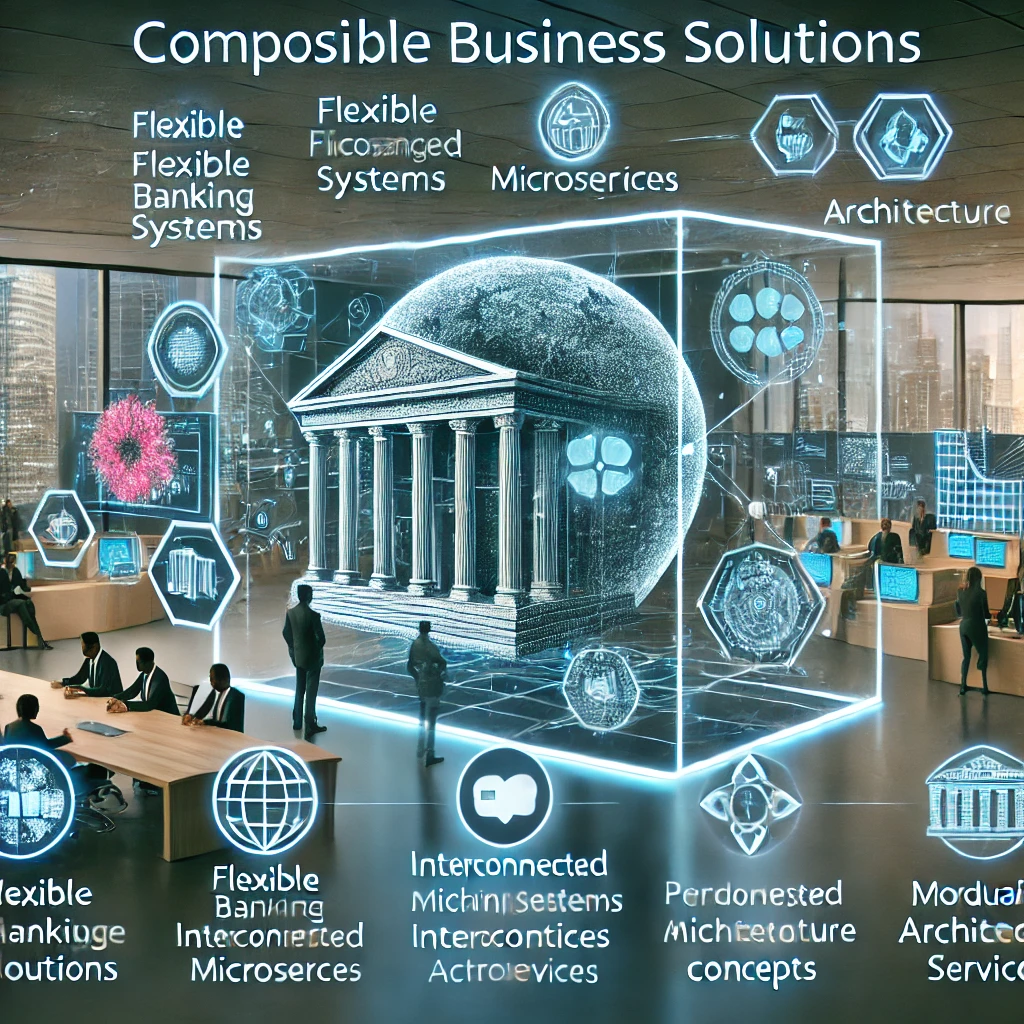
The banking industry faces a dual challenge: legacy infrastructure and the demand for agility. With millions of data points locked in decades-old systems powered by rigid code like COBOL, banks struggle to adapt to modern customer expectations and shifting market demands.
Composable banking provides a solution. By adopting a composable business model, banks gain the flexibility, scalability, and adaptability they need to remain competitive. A composable business integrates a mindset, architecture, and technology stack that allows banks to:
- Respond quickly to changes in the market
- Reduce friction in customer interactions
- Build scalable solutions with headless architectures
- Adapt rapidly to emerging opportunities and challenges
Retail, a pioneer in composable strategies, offers valuable lessons that banks can follow to unlock similar success.
What is Composable Business?
A composable business integrates mindset, practices, and tools to sense and respond to changing conditions. According to Gartner, highly composable organizations achieve higher performance, reduced costs, and improved customer satisfaction.
The three key components of composability are:
- Composable Thinking – A future-focused mindset encouraging cross-department collaboration.
- Composable Commerce Architecture – Best-of-breed solutions combined into flexible ecosystems.
- Composable Technology Stack – Scalable resources, APIs, and microservices designed for agility.
These elements enable banks to:
- React faster to change
- Use modular components for flexibility
- Innovate by mixing and matching business functions
- Improve resilience across operations
3 Key Lessons for Banks from Composable Retail
1. Reducing Friction in Customer Interactions
Retailers have proven that reducing friction is essential for customer satisfaction. E-commerce businesses face cart abandonment rates as high as 68%, often due to slow or complex purchase processes. Retailers solved this by adopting composable strategies that combine best-in-class tools:
- Scalable storefront solutions
- AI-powered fraud detection
- CRM systems for personalized customer engagement
Banks can follow this example to improve customer experiences. By integrating different business units and data sources, banks can:
- Accelerate loan approvals
- Offer tailored financial products
- Improve customer retention with personalized services
Studies show that personalization in banking can increase product sales by up to 40% and reduce customer churn by 10-30%.
2. Leveraging Headless Solutions
Headless architecture, a cornerstone of composability, separates backend functionality from frontend presentation. Retailers have used this to deliver seamless omnichannel experiences. For example:
- Nike adopted a mobile-first, headless approach to gain market share.
- Target implemented headless solutions to support purchases across multiple devices.
Banks can apply headless strategies to streamline access to account information. Whether customers use a mobile app, web portal, or ATMs, the underlying account management functionality remains consistent. This reduces development costs, simplifies updates, and enhances user experiences across platforms.
3. Responding Rapidly to Market Changes
Retailers demonstrated the value of composability during the pandemic. Businesses with agile architectures quickly pivoted to Buy Online, Pickup In-Store (BOPIS) models, keeping operations running and customers satisfied.
Banks can achieve similar agility by adopting composable models. For example, during the COVID-19 crisis, financial institutions that integrated hyperautomation were able to:
- Streamline loan processing for government-backed loans
- Expand services to new customer segments
Tecbeans helps banks build nimble, composable systems that support rapid responses to market demands while maintaining security and compliance.
Why Tecbeans is the Right Partner for Composable Banking
Tecbeans empowers financial institutions to embrace composable business models through:
- Microservices and APIs: Enabling modular, reusable solutions for agility.
- Headless Architecture: Simplifying product delivery and maintenance.
- Digital Transformation Expertise: Crafting tailored strategies that align with organizational goals and existing systems.
Banks can reduce operating costs, improve customer satisfaction, and unlock new revenue opportunities with Tecbeans as a strategic partner.
Conclusion
Composable business models are the future of banking. By learning from retail and adopting strategies like headless solutions, modular architecture, and hyperautomation, banks can adapt to shifting market demands and deliver exceptional customer experiences.
Tecbeans specializes in guiding financial institutions through digital transformation. Contact Tecbeans today to explore how composable banking can transform your organization and position you for long-term success.